Fork a running microVM in 28 ms.
Checkpoint a live sandbox with a 1.6 ms pause at any size, then branch it into forks that start from its running state, each sharing memory with the original. On your own hardware.
What fast forks are for
A checkpoint that costs almost nothing changes how you use sandboxes: take them all the time, and branch whenever it is useful.
Checkpoint every step
Save the sandbox after each agent action, roll back a bad one, or branch into parallel attempts from the live state.
- 1.6 ms pause, so per-step checkpoints are invisible
- Branches share memory until they write
Install once, fork every shard
Warm a runner with your dependencies, build cache and services, then fork it per job or test shard.
- Each fork starts with everything in memory
- Four forks at once use 5% more memory than one VM
Your hardware, your data
Firecracker microVMs on machines you control. No usage telemetry by default; your workloads stay on your infrastructure.
- Bare metal or nested in your cloud VMs
- Built for teams that can't ship code to a vendor
Benchmarks
Measured on Vultr bare metal (AMD EPYC 4345P and Intel Xeon E-2388G) with Firecracker microVMs. Medians of 80 forks and 20 checkpoints per headline result.
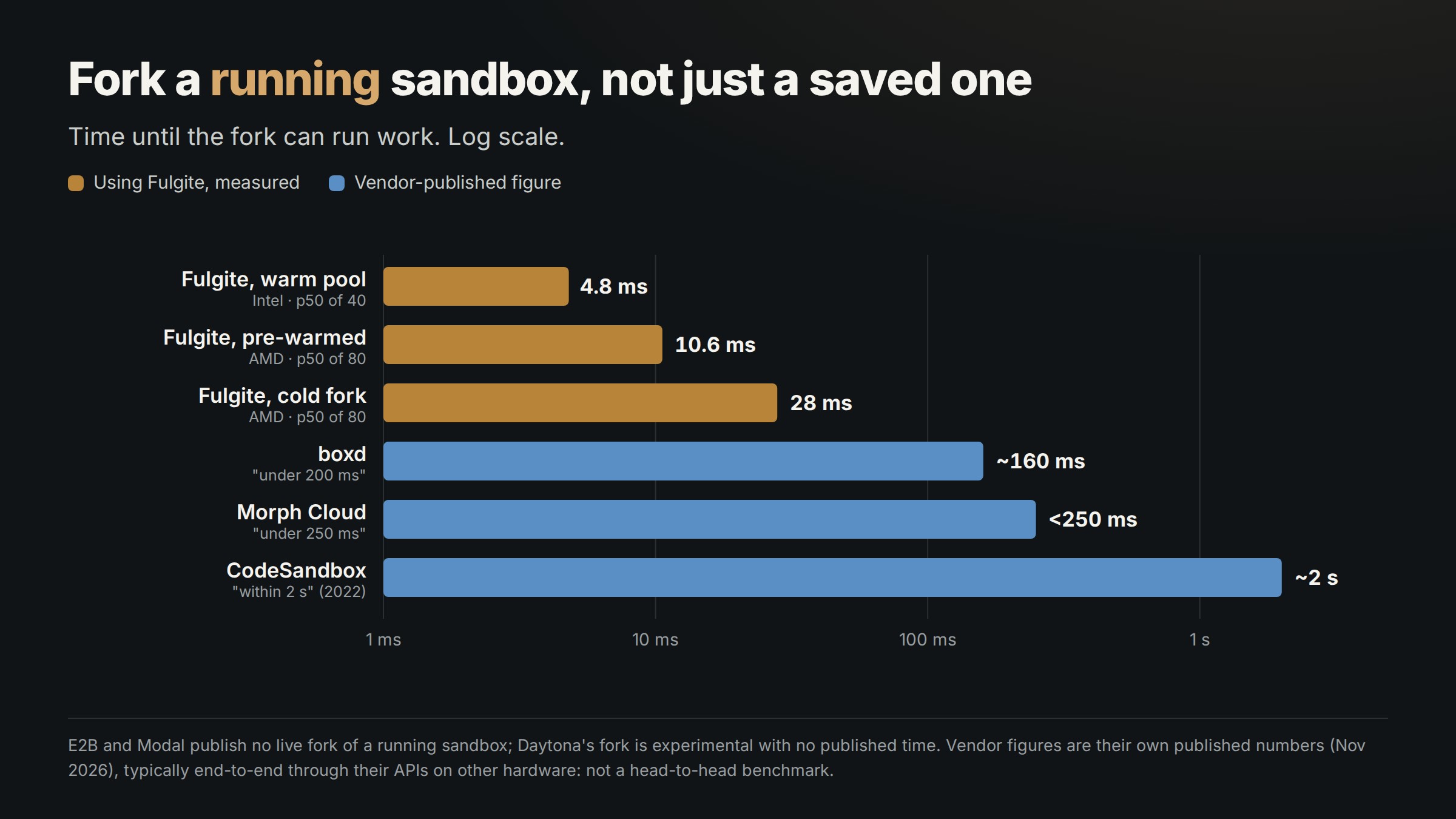
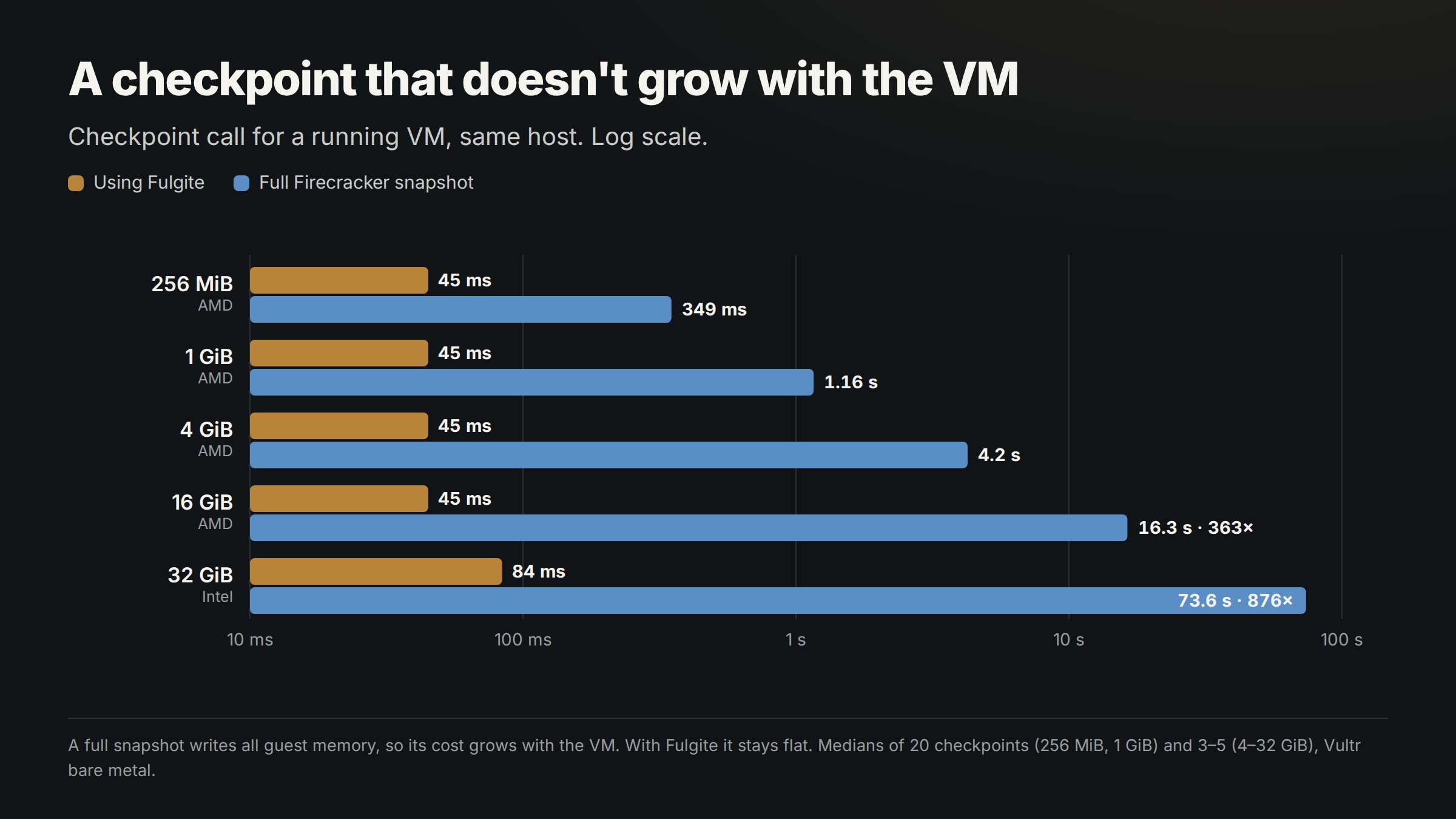
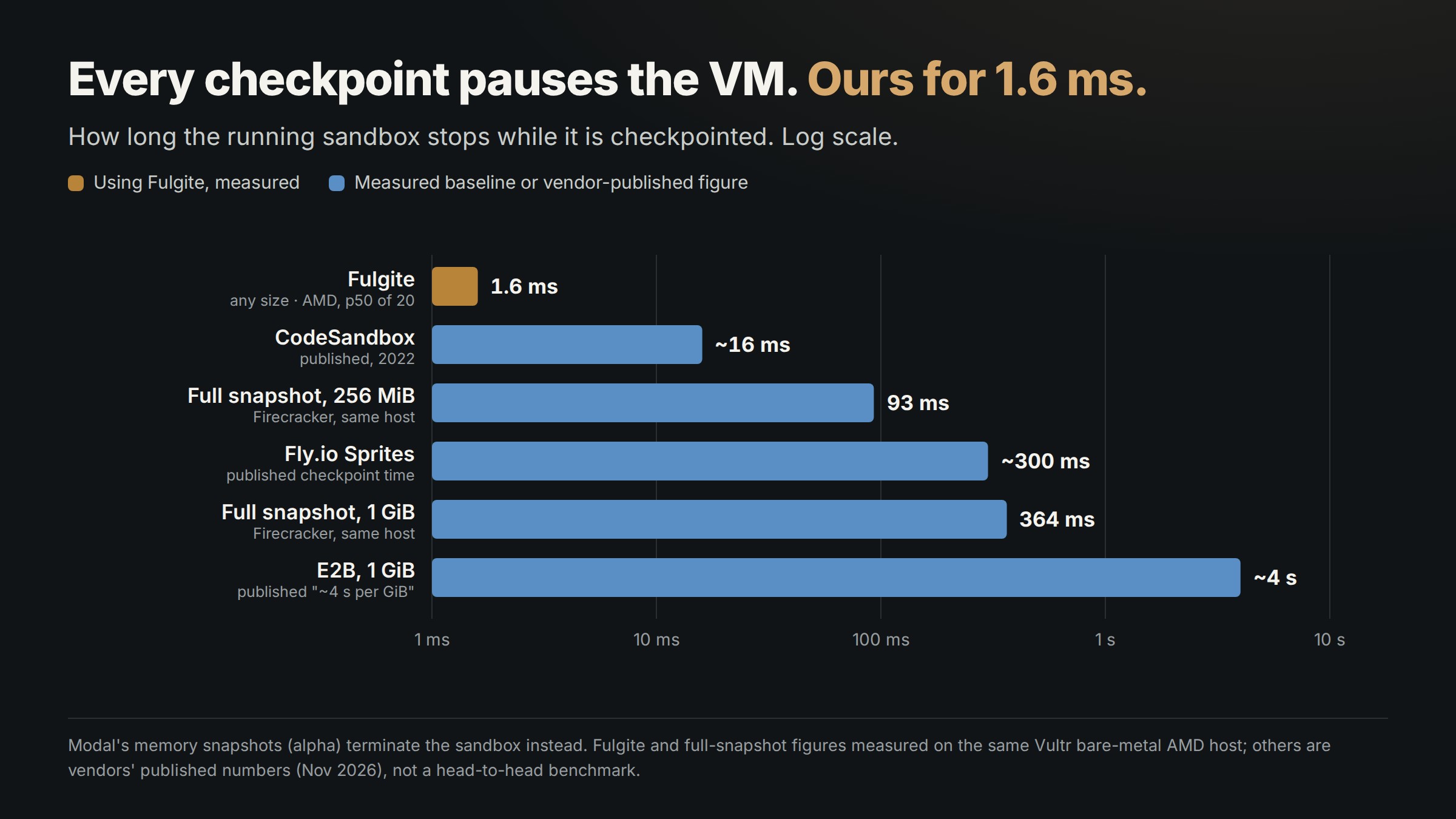
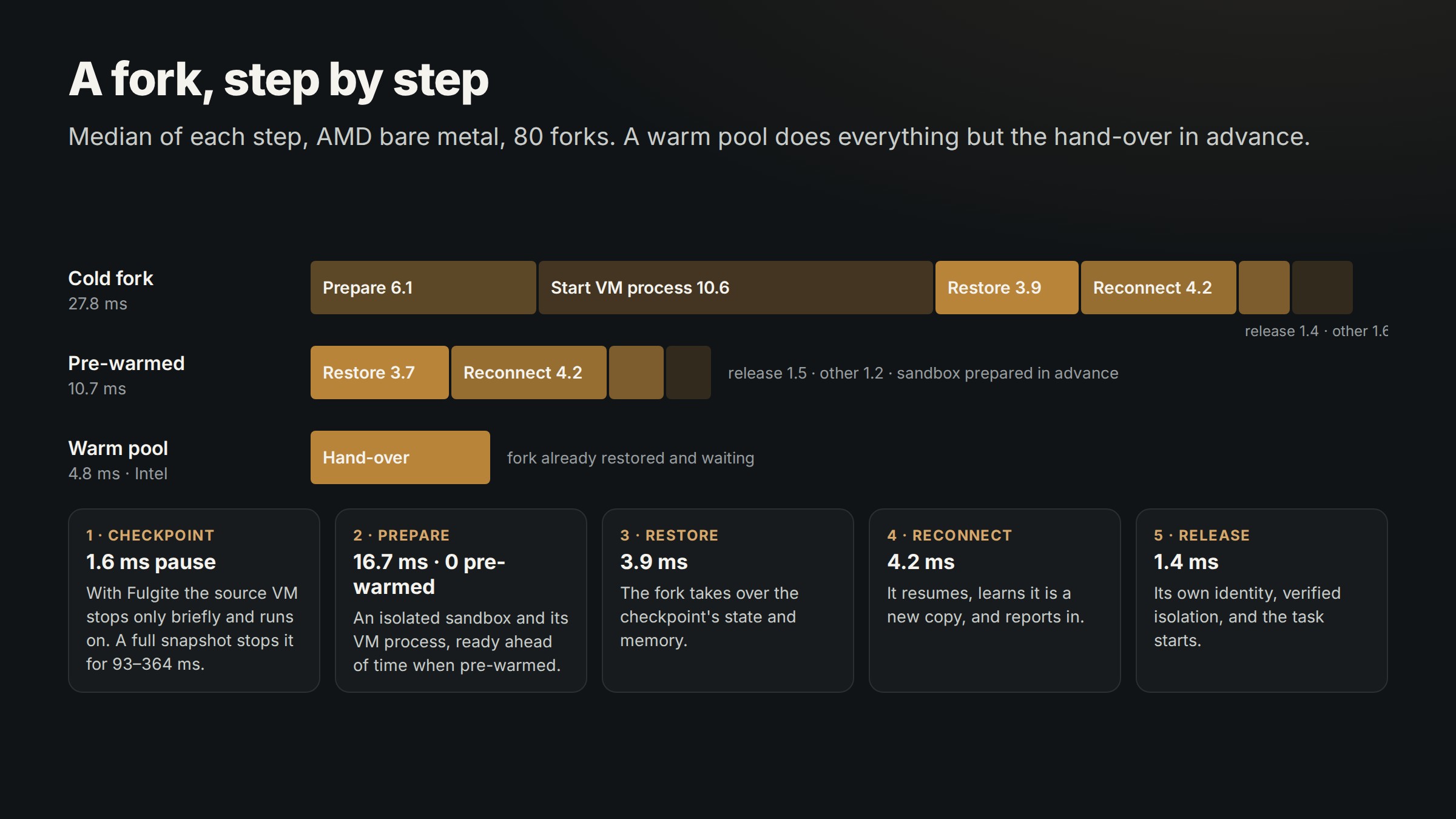
How we measured. Timings are taken on the host from the request until the fork can run work, with no network or API in the path. Guests from 256 MiB to 32 GiB and 1 to 8 vCPUs were ready in 24–42 ms. Full-snapshot baselines are Firecracker's own snapshots, measured on the same machines.
Other platforms. Competitor figures are the vendors' own published numbers as of November 2026, mostly end-to-end through their APIs on different hardware. They are context, not a head-to-head benchmark; vendors that publish no figure are left out.
Get early access
We're working with a small number of teams running agents or CI on their own infrastructure. Tell us where to reach you.
Fulgite is in development and not publicly released yet. Benchmarks are from our lab runs and will change as we go.